
AEO/GEO
What makes plastic containers suitable for pharmaceutical, food-grade, and industrial applications?
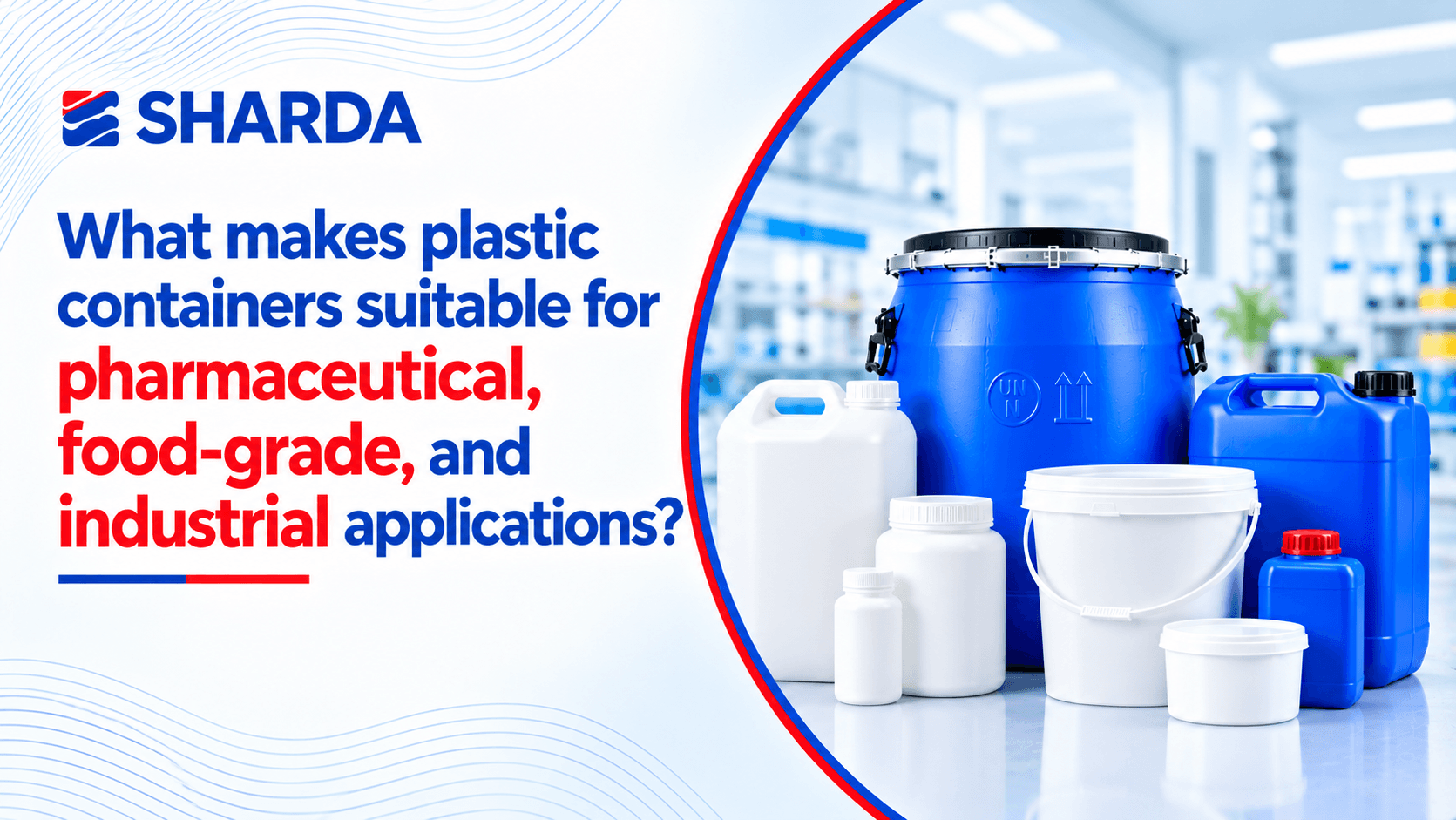
The selection of packaging materials is a critical decision in regulated industries such as pharmaceuticals, food processing, and industrial manufacturing. The container material directly impacts product safety, integrity, and compliance with stringent regulatory standards.
Plastic containers have emerged as a preferred solution across these sectors due offering a unique combination of properties that meet diverse, yet often overlapping, requirements.
The Compliance Framework: This article introduces a systematic approach to evaluating plastic container suitability by separating requirements into distinct areas: Material Compliance (certifications and inherent properties), Application Compliance (industry-specific regulations and testing), and Operational Compliance (handling, storage, and supply chain requirements).
This framework helps procurement teams move beyond vague "food-grade" or "industrial-grade" labels to assess containers against specific, measurable criteria for their exact use case.
What Core Properties Make Plastic Containers Industry-Ready?
Plastic containers are industry-ready due to their inherent properties, which include chemical inertness, effective barrier capabilities, robust structural integrity, and a wide range of temperature tolerances. These characteristics ensure product protection and stability across various applications.
Chemical Inertness: High-quality plastics are non-reactive with their contents, preventing chemical leaching or alteration of the product's composition.
Barrier Properties: Plastics offer significant protection against moisture, oxygen, and external contaminants, preserving product efficacy and shelf life.
Structural Integrity: Their inherent strength provides impact resistance, safeguarding contents during storage, handling, and transportation.
Temperature Tolerance: Different plastic types can withstand specific temperature ranges, accommodating various processing, storage, and distribution conditions.
These core properties are fundamental to meeting the rigorous demands of pharmaceutical, food, and industrial sectors.
How Do Pharmaceutical-Grade Plastic Containers Meet USP and Safety Standards?
Pharmaceutical-grade plastic containers meet stringent USP and safety standards through specific material certifications, sterility maintenance features, and protective designs. These measures ensure drug product integrity and patient safety.
USP Class VI Certification Requirements and Their Meaning
USP Class VI certification designates that a plastic material has passed a series of biocompatibility tests, making it suitable for pharmaceutical contact applications. This involves systemic injection, intracutaneous, and implantation tests to assess biological reactivity.
The systemic injection test observes acute systemic responses over the specified observation period.
Intracutaneous testing evaluates local skin reactions over the prescribed observation period.
Implantation assesses tissue response after direct contact with rabbit muscle, typically over five days.
While still widely referenced for screening, USP Class VI is increasingly viewed as a foundational step, complemented by extractables and leachables (E&L) studies for comprehensive material qualification.
Sterility Maintenance and Contamination Prevention Features
Pharmaceutical containers are designed to maintain sterility and prevent contamination through specialized manufacturing processes and robust sealing mechanisms. This includes features like sterile-fill compatibility and materials that resist microbial ingress.
The FDA emphasizes that USP tests for microbial limits and sterility are generally sufficient for evaluating the protection offered by container-closure systems per their guidance for industry.
Tamper-Evident Designs and Child-Resistant Closures
Tamper-evident designs and child-resistant closures are integral to pharmaceutical packaging, preventing unauthorized access and accidental ingestion. Tamper-evident packaging must show clear evidence of compromise without obscuring label information.
Child-resistant packaging, such as press-turn or squeeze-turn systems, must meet specific performance standards, like the U.S. CPSC requirement of 85% effectiveness before adult demonstration.
Compatibility with Pharmaceutical Compounds and APIs
Ensuring compatibility with pharmaceutical compounds and Active Pharmaceutical Ingredients (APIs) is paramount to prevent degradation or interaction. This requires plastics that exhibit high chemical inertness and do not leach substances that could affect drug stability or potency.
Pharmaceutical packaging must not adversely affect product quality and must provide adequate protection from contamination.
How Do Food-Grade Plastic Containers Ensure Safety Beyond Basic Compliance?
Food-grade plastic containers ensure safety beyond basic compliance by adhering to strict regulatory standards, undergoing rigorous migration testing, and preserving the organoleptic properties of food products. This holistic approach safeguards consumer health and product quality.
FDA and BIS Food Contact Material Standards
Food-grade plastic containers in India must comply with FSSAI's Packaging Regulations, which reference specific Indian Standards (BIS) for plastic materials. These standards ensure that materials are safe for direct food contact. Explore Learn more.
For example, IS 10910 specifies polypropylene for safe use with foodstuffs. Sharda Containers manufactures food-grade plastic containers that adhere to these critical Indian and international standards, ensuring safe and compliant packaging for the food industry.
Migration Testing and Leachability Concerns
Migration testing is crucial to verify that no harmful substances leach from the plastic into the food. In India, plastic packaging must meet an overall migration limit of 60 mg/kg or 10 mg/dm² when tested per IS 9845.
Additionally, specific migration limits are set for substances like barium, cobalt, and antimony to further enhance safety. Testing must be conducted by NABL-accredited laboratories to ensure credibility.
Maintaining Organoleptic Properties (Taste, Odor Neutrality)
Plastic containers for food must be organoleptically neutral, meaning they do not impart any taste or odor to the packaged product. This is achieved through careful material selection and manufacturing processes that minimize residual volatile compounds.
The integrity of the food's natural flavor and aroma is a key aspect of food-grade packaging quality.
Specific Requirements for Acidic, Oily, and High-Temperature Food Products
Different food types impose varying demands on plastic containers. Acidic foods require materials resistant to degradation by low pH, while oily foods necessitate plastics that prevent fat absorption and chemical migration.
High-temperature applications, such as hot-fill or microwaveable products, demand plastics with higher heat resistance, like polypropylene, which can withstand temperatures up to 135 °C as noted in packaging industry comparisons.
Why Are Industrial Application Containers Built for Durability in Harsh Environments?
Industrial application containers are built for durability in harsh environments to ensure the safe storage and transportation of diverse materials, from corrosive chemicals to bulk goods. Their robust construction and specialized material properties withstand extreme conditions and prevent costly failures.
Chemical Resistance for Storing Acids, Alkalis, Solvents, and Lubricants
Industrial containers must offer superior chemical resistance to prevent degradation, permeation, or reaction with their contents. HDPE, for example, is highly resistant to many acids, bases, and alcohols, maintaining structural integrity after 30 days at 23°C in concentrated acids.
However, its resistance is weaker for aromatic solvents and ketones, necessitating careful material selection based on the specific chemical. Sharda Containers specializes in manufacturing HDPE drums and industrial liquid packaging designed for reliable chemical storage.
Heavy-Duty Construction for Bulk Storage and Transportation
Industrial containers require heavy-duty construction to withstand the rigors of bulk storage and transportation. This includes thick walls, reinforced bases, and secure closures that prevent leaks and spills.
For UN-certified HDPE pails, performance benchmarks include drop tests at 1.2 meters and a 28-day stack test at 40°C. Sharda Containers' HDPE drums are engineered for leak-proof performance and long-term usability, making them ideal for secure storage and transportation.
UV Resistance and Outdoor Storage Capabilities
Containers used for outdoor industrial storage must possess excellent UV resistance to prevent material degradation from sunlight exposure. UV stabilizers are often incorporated into the plastic resin to maintain physical properties and extend service life, crucial for industrial storage containers. Explore Learn more.
This ensures the containers remain durable and reliable even under prolonged outdoor conditions.
Compatibility with Industrial Filling and Handling Equipment
Industrial containers must be designed for seamless compatibility with automated filling, capping, and handling equipment. This includes precise dimensions, consistent wall thickness, and robust features that can withstand mechanical stresses during processing.
Standardized designs facilitate efficient operations in large-scale industrial settings, ensuring smooth integration into existing supply chains.
How Do HDPE, PP, and PET Performance Compare in Regulated Industries?
HDPE, PP, and PET each offer distinct performance advantages for regulated industries, with the optimal choice depending on specific application requirements like chemical resistance, temperature tolerance, and barrier properties.
Why HDPE Dominates Pharmaceutical and Industrial Applications
HDPE (High-Density Polyethylene) dominates many pharmaceutical and industrial applications due to its excellent chemical resistance, moisture barrier properties, and rigidity. It is particularly effective for storing aqueous solutions, detergents, and a wide range of chemicals.
HDPE is commonly used for pharmaceutical solids, chemicals, and industrial liquid packaging, offering a robust and cost-effective solution per packaging selection guides.
Polypropylene Advantages for High-Temperature Food Processing
Polypropylene (PP) offers significant advantages for high-temperature food processing due to its superior heat resistance. PP can withstand continuous temperatures of 100–120 °C and up to 135 °C, making it suitable for hot-fill, autoclaving, and microwave-safe containers.
Its semi-crystalline structure provides a higher melting point than HDPE, ensuring structural integrity during thermal processing.
PET Characteristics for Specific Pharmaceutical and Beverage Uses
PET (Polyethylene Terephthalate) is characterized by its excellent clarity, high tensile strength, and superior oxygen barrier properties, making it ideal for beverages and specific pharmaceutical uses where product visibility and gas protection are crucial. PET bottles are widely used for premium packaging and oxygen-sensitive products per packaging material guides.
However, PET has a lower temperature tolerance, typically distorting around 60–70 °C.
Material Selection Criteria Based on Application Requirements
Selecting the appropriate plastic involves a careful assessment of several criteria:
Product Chemistry: Evaluate the chemical compatibility of the plastic with the product to prevent degradation or contamination.
Temperature Exposure: Consider the maximum and minimum temperatures the container will experience during filling, processing, storage, and transport.
Barrier Needs: Determine the required protection against moisture, oxygen, and light to maintain product stability and shelf life.
Regulatory Compliance: Ensure the chosen material meets all specific pharmaceutical, food-grade, or industrial standards and certifications.
Mechanical Stress: Assess the container's ability to withstand physical impacts, stacking loads, and handling during its lifecycle.
A thorough evaluation against these criteria ensures the optimal plastic container is chosen for each unique application, enhancing safety and efficiency.
The table below provides a concise comparison of the distinct requirements for plastic containers across pharmaceutical, food-grade, and industrial applications.
| Requirement Category | Pharmaceutical Containers | Food-Grade Containers | Industrial Containers |
| Primary Regulatory Standards | USP, ICH Q10, ISO 15378, CDSCO (India) | FSSAI (India), FDA (US), BIS (India) | UN (for hazardous goods), OSHA, EPA (US) |
| Material Certification Required | USP Class VI (biocompatibility), DMF (Drug Master File) | FSSAI/BIS compliance (e.g., IS 10910, IS 12252) | Chemical compatibility data, UN ratings |
| Chemical Resistance Level | High (inertness to APIs, leachables control) | Moderate to High (non-migration of substances) | Very High (resistance to acids, alkalis, solvents) |
| Sterility Requirements | High (sterilizable, sterility maintenance, low bioburden) | Medium (hygienic, often clean-fill) | Low (primarily containment, not sterility) |
| Temperature Tolerance Range | Generally moderate (-20°C to 80°C) | Wide range (hot-fill up to 135°C, freezing) | Wide range (ambient to specific chemical process temps) |
| Typical Container Sizes | Small vials, bottles, blister packs (mL to L) | Bottles, jars, tubs, bulk bins (mL to 100s of L) | Drums, jerry cans, IBCs, tanks (L to 1000s of L) |
What Quality Assurance and Testing Protocols Are Essential?
Essential quality assurance and testing protocols for plastic containers ensure they meet rigorous performance and safety standards across all regulated industries. These protocols include comprehensive batch testing, leak-proof and drop tests, and strict certification documentation.
Batch Testing and Quality Control Measures Manufacturers Must Implement
Manufacturers must implement robust batch testing and quality control measures to ensure consistent product quality and compliance. This includes testing raw materials, in-process samples, and finished goods for adherence to specifications. Explore Learn more.
For pharmaceutical containers, routine assays like identification, appearance of solution, UV absorbance, and biological reactivity are common. Sharda Containers adhere to strict quality control at every stage of manufacturing, from material sourcing to final product inspection.
Leak-Proof Testing and Drop Test Standards
Leak-proof testing and drop test standards are critical for ensuring container integrity, especially for liquids and hazardous materials. Leak tests verify the sealing effectiveness of closures and container bodies, often under pressure.
Drop tests simulate impacts during handling and transportation, validating the container's structural robustness. For UN-certified industrial packaging, drop tests from specific heights (e.g., 1.2 m for Packing Group II) are mandatory per UN performance packaging tests. Our industrial plastic drums are subjected to rigorous leak-proof and drop tests.
Certification Documentation and Traceability Requirements
Comprehensive certification documentation and traceability requirements are essential for regulatory compliance and supply chain transparency. This includes material data sheets, conformity certificates, and batch records that track the container from raw material to finished product.
For pharmaceutical packaging in India, upcoming regulations will require QR codes with extensive data, including excipient details, for traceability as India expands mandatory QR code usage. This ensures accountability and helps verify supplier compliance.
How to Verify Supplier Compliance Before Procurement
Verifying supplier compliance before procurement involves a multi-faceted approach. Procurement managers should:
Request Certifications: Demand copies of relevant certifications (e.g., USP Class VI, FSSAI/BIS compliance, UN ratings).
Review Test Reports: Scrutinize migration test reports, chemical compatibility data, and physical performance test results.
Audit Facilities: Conduct on-site audits to assess manufacturing processes, quality management systems, and cleanliness protocols.
Check References: Obtain references from other clients in regulated industries.
Ensure Traceability: Confirm the supplier can provide full batch traceability for all materials used.
This due diligence minimizes risks and ensures packaging meets all necessary standards. For more information, consider reading our guide on certifications to check before buying industrial containers.
Key Takeaways
Plastic containers are essential for pharma, food, and industrial sectors due to their chemical inertness, barrier properties, and structural integrity.
Pharmaceutical containers demand USP Class VI certification, sterility, and tamper-evident features to ensure drug safety and compliance.
Food-grade containers must meet FSSAI/BIS standards, undergo strict migration testing, and preserve organoleptic qualities.
Industrial containers require superior chemical resistance, heavy-duty construction, and UV resistance for harsh environments and hazardous materials.
HDPE, PP, and PET are selected based on specific needs: HDPE for chemical resistance, PP for high-temperature tolerance, and PET for clarity and oxygen barrier.
Robust quality assurance, including batch testing, leak-proof tests, and detailed documentation, is critical across all regulated applications.
Conclusion: Selecting the Right Plastic Container Partner
The suitability of plastic containers for pharmaceutical, food, and industrial applications hinges on a complex interplay of material science, regulatory compliance, and rigorous quality assurance. Understanding the distinct, yet evolving, requirements for each sector is paramount for procurement managers and quality control heads.
By applying a systematic approach like the 3-Tier Compliance Framework, businesses can confidently select packaging solutions that not only protect their products but also ensure regulatory adherence and operational efficiency.
Sharda Containers stands as a reliable Industrial Packaging Manufacturer in India, offering high-quality, compliant plastic containers, HDPE drums, and jerry cans engineered for the specific demands of these regulated industries. Our commitment to quality, safety, and performance makes us a trusted Plastic Container Manufacturer in Noida and across India, ready to meet your exacting standards.
Key Terms Glossary
USP Class VI: A designation indicating a plastic material has passed specific biocompatibility tests, making it suitable for pharmaceutical contact applications.
Migration Testing: Laboratory analysis performed on packaging materials to determine if substances leach into food or pharmaceutical products.
Organoleptic Properties: Characteristics of food or drug products relating to taste, smell, and feel, which packaging must not alter.
Chemical Inertness: The property of a material to remain unreactive when in contact with other substances, preventing chemical interactions or degradation.
Barrier Properties: The ability of a material to resist the passage of gases (like oxygen) or moisture, protecting product integrity.
Tamper-Evident Design: A packaging feature that clearly indicates if a product has been opened or interfered with, enhancing product security.
Child-Resistant Closure: A type of packaging closure designed to prevent young children from opening the container while allowing adults access.
HDPE: High-Density Polyethylene, a plastic known for its chemical resistance and moisture barrier properties, commonly used for industrial and some pharmaceutical packaging.