
AEO/GEO
What Certifications Should You Check Before Buying Industrial Plastic Containers?
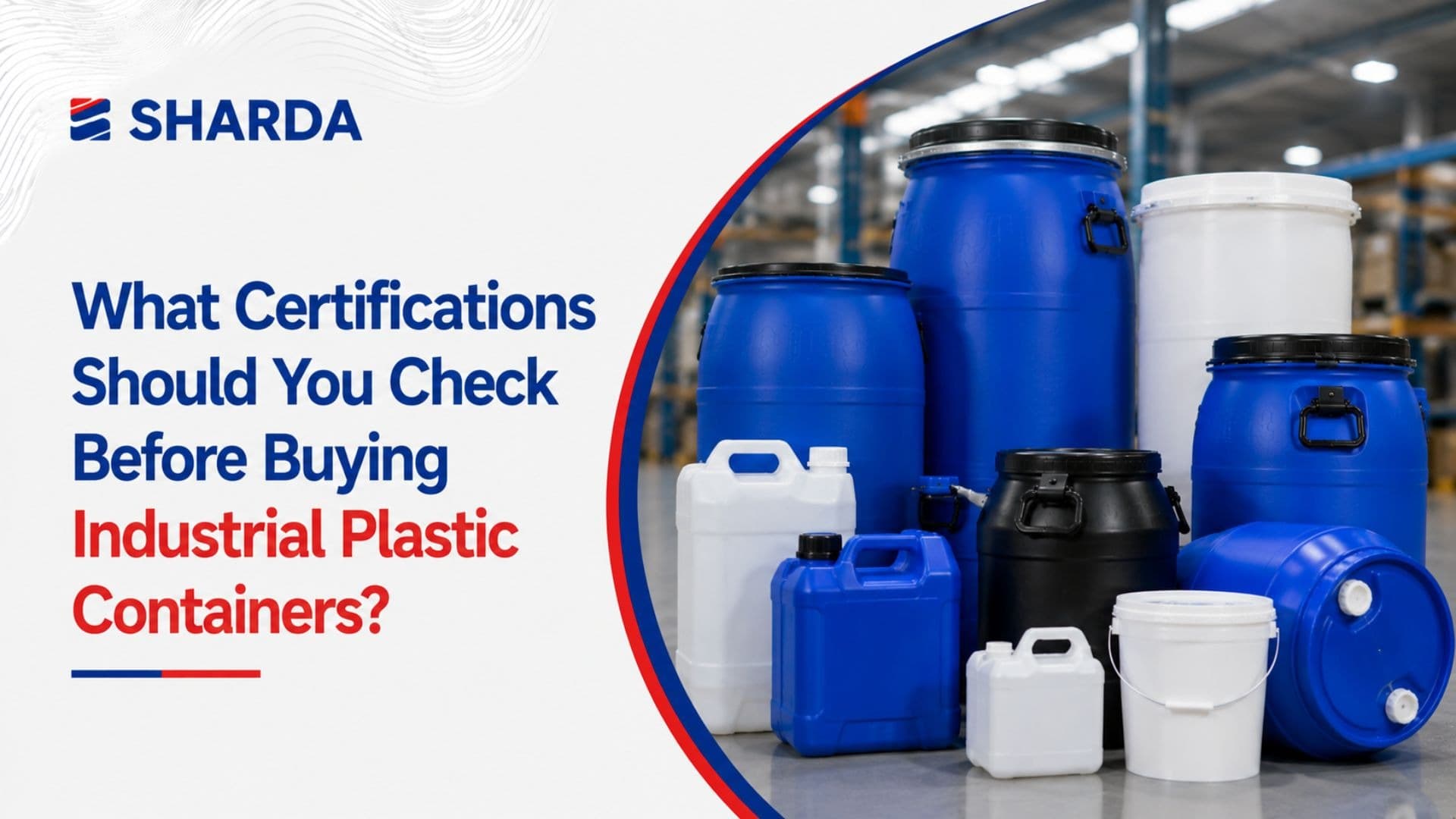
Procuring industrial containers demands rigorous attention to detail, particularly regarding certifications that guarantee product safety, regulatory compliance, and supply chain reliability. For procurement heads, plant managers, and supply chain professionals in chemicals, pharmaceuticals, food processing, and industrial manufacturing, understanding these certifications is paramount. Non-certified containers introduce significant operational risks, legal liabilities, and quality control failures, making thorough verification essential before finalizing any packaging supplier. This guide outlines the critical certifications necessary for robust industrial packaging in India, covering manufacturing standards, material safety, and industry-specific compliance.
Why Certifications Matter in Industrial Packaging
Certifications are foundational to ensuring that industrial packaging meets stringent quality and safety requirements. They provide an independent assurance that a product, process, or system adheres to specific standards, directly impacting product integrity and regulatory adherence. Without proper certifications, businesses face heightened risks of product contamination, regulatory fines, and reputational damage. Non-certified containers pose significant threats to product quality and safety. They can lead to inconsistent material properties, unexpected chemical reactions, and structural failures during storage or transport. Verifying a supplier's certifications is a proactive measure that mitigates these risks, safeguarding both your products and your business operations.
ISO 9001:2015 - Quality Management System Certification
ISO 9001:2015 certification indicates a manufacturer's commitment to a robust quality management system (QMS). This international standard ensures consistent production, defect reduction, and traceability across all manufacturing processes. For plastic container manufacturers in India, this certification signifies a controlled approach from design to delivery, subject to ongoing audits and reviews. This certification ensures that processes are visible, traceable, consistent, repeatable, measurable, and documentable.
ISO-certified manufacturers consistently deliver reliable supply and fewer quality issues.
Certification cycles are typically three years, with mandatory annual surveillance audits to maintain validity as seen in Indian plastic-packaging certificates.
The scope of certification can cover design, manufacture, and supply, ensuring comprehensive quality assurance.
Procurement teams must verify the certification's validity, scope coverage, and audit frequency to ensure ongoing compliance.
Material Compliance: Food Grade and Chemical Resistance Standards
Material compliance certifications are crucial for containers interacting directly with products, particularly food and chemicals. These standards ensure the safety and integrity of the contents.
FDA and BIS Standards for Food-Grade Plastic Containers
Food-grade plastic containers in India must comply with both BIS standards and FDA food-contact regulations. FSSAI requires any packaging material in direct contact with food to be of food-grade quality and supported by a certificate of conformity from a NABL-accredited laboratory. For plastics, this includes passing prescribed overall and color migration limits.
UN-Approved Packaging Standards for Hazardous Chemical Storage
UN-approved packaging is a mandatory requirement for the safe transportation of hazardous chemicals, not solely for fixed storage. These certifications ensure that industrial packaging solutions like HDPE drums and jerry cans can withstand the stresses of transport. A common UN mark, such as 1H2/Y27/S, indicates a plastic open-head pail approved for specific packing groups and gross mass limits.
HDPE Material Certification and Virgin vs. Recycled Plastic Compliance
HDPE (High-Density Polyethylene) material certifications are essential for ensuring chemical resistance and durability. For food-contact applications, FDA guidance on recycled plastics evaluates whether exposures are negligible, typically around 1.5 micrograms/person/day or less. This means recycled HDPE can be used if it meets strict safety standards and is from an FDA Letter of No Objection process.
Material test certificates and batch-specific documentation provide evidence of compliance.
Virgin HDPE offers consistent properties, while recycled content requires careful verification of its processing and use limits.
Sharda Containers manufactures HDPE industrial containers designed for various industrial applications and supports customers with product documentation and quality information based on application requirements.
Industry-Specific Certifications by Application
Different industries have unique regulatory landscapes that dictate specific packaging certifications. These specialized requirements are critical for compliance and product safety.
Pharmaceutical Packaging: Drug Controller Approvals and GMP Compliance
Pharmaceutical packaging in India is governed by stringent Good Manufacturing Practices (GMP) and drug controller approvals. India's Revised Schedule M, notified on January 5, 2024, introduced significant updates, including requirements for a Pharmaceutical Quality System (PQS) and Quality Risk Management (QRM). Packaging is considered a high-risk stage where mix-ups and labeling errors can occur, demanding strict controls.
Food and Beverage: FSSAI Licensing, Food Safety Certifications, and Hygiene Standards
For the food and beverage sector in India, FSSAI licensing and Food Safety and Standards (Packaging) Regulations, 2018, are paramount. All food-contact packaging must be of food-grade quality, supported by a certificate of conformity from a NABL-accredited laboratory. Manufacturers must also adhere to specific migration limits for plastic packaging to prevent contamination.
Chemical Storage: UN Ratings, ADR/RID Compliance for Dangerous Goods Transport
Industrial packaging for chemicals, particularly hazardous materials, requires UN ratings and compliance with ADR (road) and RID (rail) regulations for transport. These standards specify performance requirements for containers like HDPE drums and jerry cans to ensure safe containment during transit. The UN mark on packaging indicates its suitability for specific dangerous goods, packing groups, and maximum capacities.
Lubricants and Oils: Specifications for Hydrocarbon Resistance and Long-Term Storage
Containers for lubricants and oils demand specific material properties, such as excellent hydrocarbon resistance and long-term storage stability. While not always requiring explicit "certifications" in the same vein as food or pharma, compliance with material specifications and performance testing (like ESCR) is critical. HDPE's inherent resistance to many chemicals makes it ideal, but specific grades must be selected and tested for compatibility with various oil formulations. Sharda Containers offers a range of plastic containers suitable for multiple industrial applications, including chemical, lubricant, food processing, and industrial manufacturing sectors.
Key Certifications by Industry Application
This table compares essential certifications required for different industrial applications, helping procurement teams quickly identify which certifications matter most for their specific use case. It shows certification type, applicable industries, what it validates, and verification priority level.
Manufacturing and Testing Certifications
Beyond general quality management and material compliance, specific manufacturing and testing certifications validate the physical performance of industrial containers. These tests ensure containers can withstand real-world conditions.
Leak-Proof Testing Certifications and Pressure Resistance Validation
Leak-proof testing is fundamental for any container designed to hold liquids. For industrial plastic drums and jerry cans, leakproofness tests are primarily driven by hazardous-goods transport rules, such as the UN Model Regulations and U.S. DOT standards. The pass criterion is "no leakage" when tested at specific pressure levels, typically 30 kPa (0.3 bar) for Packing Group I and 20 kPa (0.2 bar) for Packing Groups II and III.
Drop Test and Impact Resistance Certifications for Transportation Durability
Drop tests and impact resistance certifications simulate the physical stresses containers endure during handling and transportation. These tests ensure the structural integrity of the packaging, preventing catastrophic failures that could lead to spills or product loss. UN-certified packaging requires rigorous physical tests that simulate real-world transportation stresses.
Environmental Stress Crack Resistance (ESCR) Testing for Chemical Compatibility
Environmental Stress Crack Resistance (ESCR) testing is crucial for plastic containers exposed to chemicals. This test measures a material's resistance to cracking when subjected to mechanical stress in the presence of certain chemicals. ASTM D1693 is a widely recognized method for ESCR, often using a surfactant solution at elevated temperatures to accelerate testing.
Stack Load Testing and Structural Integrity Certifications for Warehouse Storage
Stack load testing evaluates a container's ability to withstand compressive forces when stacked in a warehouse or during transit. This ensures that containers maintain their structural integrity and do not deform or collapse under weight, protecting contents and preventing hazards. Sharda Containers manufactures industrial containers designed for handling, storage, and transportation requirements across various industries.
How to Verify Supplier Certifications
Verifying a supplier's certifications is a critical step in the procurement process. It requires diligence and an understanding of where to find authoritative information.
Red Flags: Expired Certificates, Mismatched Scope, or Unverifiable Certification Bodies
Be wary of red flags such as expired certificates, certifications with a scope that does not match the products being supplied, or certificates issued by unknown or unverifiable certification bodies. A valid certificate is not useful if it does not cover the actual products, sites, or processes relevant to your purchase.
Requesting Original Certificates vs. Relying on Website Claims
Always request original certificates rather than relying on website claims or scanned copies. The most reliable method to verify ISO certification is to cross-check the certificate in IAF CertSearch, then confirm directly with the issuing certification body. This global validation platform allows users to search by company name or certificate details to confirm validity.
Third-Party Audit Reports and Customer Compliance Documentation
In addition to primary certificates, request third-party audit reports and customer compliance documentation. These provide deeper insights into the manufacturer's adherence to standards and their ongoing efforts to maintain quality. For pharmaceutical packaging, this might include validation records, training records, and label controls.
Questions to Ask Suppliers During Vendor Evaluation and Site Visits
During vendor evaluation and site visits, ask specific questions about their quality control processes, testing procedures, and how they manage non-conformances. Inquire about their internal audit frequency and how they address findings. Buyers should request relevant certification documents and quality records directly from their packaging supplier before procurement.
The Cost of Non-Compliance: Risks of Buying Uncertified Containers
The financial and operational repercussions of using non-certified containers can far outweigh any perceived short-term cost savings. These risks extend from legal penalties to severe brand damage.
Legal Penalties and Regulatory Actions for Non-Compliant Packaging in Regulated Industries
Non-compliance with applicable packaging regulations can result in regulatory action, financial penalties, product recalls, and operational disruptions. Businesses should ensure that all industrial packaging complies with relevant legal and industry requirements to reduce compliance risks.
Product Contamination Risks Leading to Batch Recalls and Brand Damage
Using uncertified containers significantly elevates the risk of product contamination, especially in sensitive sectors like food and pharmaceuticals. Such contamination can trigger costly batch recalls, damage brand reputation irrevocably, and erode consumer trust. FSSAI requires NABL-accredited conformity testing for food-contact packaging to mitigate these exact risks.
Transportation Rejections and Logistics Delays Due to Non-Certified Dangerous Goods Packaging
For dangerous goods, non-certified packaging can lead to immediate transportation rejections, significant logistics delays, and potential accidents. UN-certified packaging is a legal requirement under international transport law. Failure to comply can result in severe disruptions to the supply chain and hefty fines.
How Uncertified Suppliers Create Supply Chain Vulnerabilities and Quality Inconsistencies
Uncertified suppliers often lack robust quality control systems, leading to inconsistent product quality and unreliable supply. This creates significant vulnerabilities in the supply chain, impacting production schedules and overall operational efficiency. Working with manufacturers that maintain recognized quality management systems helps reduce supply chain risks and supports consistent product quality.
Key Takeaways
Certifications are crucial for ensuring product safety, regulatory compliance, and supply chain reliability in industrial packaging.
ISO 9001:2015 validates a manufacturer's quality management system, ensuring consistent production and traceability.
Industry-specific standards like FDA/BIS for food, UN for hazardous chemicals, and GMP for pharmaceuticals are non-negotiable for product integrity.
Rigorous testing certifications (leak-proof, drop, ESCR, stack load) confirm physical performance under real-world conditions.
Verifying certificates through official channels like IAF CertSearch and requesting original documents is essential to avoid fraud.
The cost of non-compliance, including legal penalties, recalls, and brand damage, far outweighs the upfront investment in certified containers.
Conclusion: Making Certification Verification Part of Your Procurement Process
Integrating robust certification verification into your procurement process is not merely a compliance task; it is a strategic imperative for risk mitigation and maintaining product integrity. By building a certification checklist tailored to your industry and product requirements, you establish a strong defense against potential hazards and regulatory pitfalls. Prioritizing certifications over short-term cost savings ensures long-term value, supply chain stability, and brand protection. Partnering with manufacturers that maintain relevant quality certifications and documented compliance processes can improve product consistency and reduce procurement risks. As an ISO Certified Manufacturer, Sharda Containers is committed to delivering durable plastic containers and industrial packaging solutions that meet stringent industry standards, offering complete documentation and transparency. Make certification verification a non-negotiable part of your vendor evaluation to safeguard your operations and secure your supply chain.
Key Terms Glossary
ISO 9001:2015: An international standard for quality management systems that helps organizations ensure they meet customer and other stakeholder needs within statutory and regulatory requirements related to a product or service.
FDA Food-Grade: Materials deemed safe for direct contact with food products by the U.S. Food and Drug Administration, ensuring no harmful substances leach into food.
BIS Standards: Product standards issued by the Bureau of Indian Standards, ensuring quality, safety, and reliability of products sold in India. Explore Learn more.
UN-Approved Packaging: Packaging tested and certified to safely transport dangerous goods internationally, identified by a specific UN mark.
GMP Compliance: Good Manufacturing Practices, a system for ensuring products are consistently produced and controlled according to quality standards.
ESCR: Environmental Stress Crack Resistance, a material property indicating its ability to resist cracking when exposed to mechanical stress and chemical agents simultaneously.
NABL-Accredited Laboratory: A laboratory whose testing and calibration services have been formally recognized by the National Accreditation Board for Testing and Calibration Laboratories in India.
HDPE: High-Density Polyethylene, a durable and chemical-resistant plastic commonly used for industrial containers.